





DDR5-4800 vs 5600 vs 6400: How Much RAM Speed Do You Really Need?
Which DDR5 RAM speed should you choose for your Mini PC? For most Mini PCs with AMD Ryzen 7000/8000/9000 and SO-DIMM slots, DDR5-5600 offers the best balance of performance, compatibility, and value. DDR5-4800 is perfectly adequate for office tasks and everyday use, whilst DDR5-6400 benefits primarily gaming with integrated graphics and local AI workloads. Choosing the right Mini PC RAM from the outset makes a real difference in long-term stability and upgradeability.
This guide compares DDR5-4800 vs DDR5-5600 vs DDR5-6400 — also written as DDR5 4800 vs 5600 vs 6400 in searches — to help you pick the right DDR5 RAM for a Mini PC. With speeds explained through performance tests, latency analysis, and dual-channel benchmarks, we also address the debate between having more RAM and having faster RAM.
DDR5 4800 vs 5600 vs 6400: Which DDR5 RAM Speed for Your Mini PC?
For most Mini PC users, DDR5-5600 is the best choice. It offers the best balance of performance, compatibility, stability, and value. DDR5-4800 is perfectly adequate for office tasks and everyday use, whilst DDR5-6400 is mainly beneficial for Mini PCs with integrated graphics, gaming, and local AI workloads.
- Office and browsing: DDR5-4800 + 16GB of RAM is sufficient
- Gaming and general performance: DDR5-5600 + 32GB dual channel is the recommended configuration
- AI workloads and gaming with iGPU: DDR5-6400 can provide additional memory bandwidth if your CPU and BIOS support it
- The most important upgrade: Dual channel matters more than chasing higher MHz

Does DDR5 RAM Speed Matter in a Mini PC?
Yes — and it matters more in Mini PCs than in most desktop PCs. Most Mini PCs use integrated graphics (iGPU) such as the AMD Radeon 780M or Intel Iris Xe, which share system memory instead of having dedicated VRAM. Faster DDR5 RAM directly increases the memory bandwidth available to both the CPU and GPU.
DDR5 RAM speed matters most in these scenarios:
- Gaming with iGPU — integrated graphics depend entirely on system RAM bandwidth, so higher DDR5 speeds can increase frame rates (up to 20% when moving from DDR5-4800 to DDR5-6400)
- Local AI inference — running LLMs like Llama 3 or Mistral on a Mini PC is heavily constrained by memory bandwidth; DDR5-6400 can deliver 15–18% more tokens per second than DDR5-4800
- 4K video editing — timeline scrubbing and export speeds benefit from higher memory throughput
- Multithreaded workloads — rendering, compression, and compilation scale with memory bandwidth
DDR5 RAM speed matters less when your Mini PC has a dedicated GPU (which has its own VRAM), for office tasks/web browsing (not bandwidth-limited), or for running single-threaded applications (which are more sensitive to latency than bandwidth).

What Is DDR5 RAM? DDR5 vs DDR4 at a Glance
DDR5 (Double Data Rate 5) is the current generation of system memory. The DDR5 vs DDR4 comparison shows three key improvements: higher bandwidth (starting at 38.4 GB/s versus 25.6 GB/s for DDR4), lower power consumption (1.1V vs 1.2V — a meaningful reduction for energy-conscious users), and a dual 32-bit sub-channel architecture that improves multithreaded efficiency. For Mini PC users, DDR5 vs DDR4 matters most when using integrated graphics — the bandwidth gap directly affects iGPU gaming performance, and the lower voltage contributes to better power efficiency in compact systems.
| Specification | DDR4 | DDR5 |
|---|---|---|
| Base speed | 2133–3200 MHz | 4800–6400+ MT/s |
| Maximum bandwidth | 25.6 GB/s | 51.2 GB/s |
| Voltage | 1.2V | 1.1V |
| Channel architecture | 64-bit channel | Two 32-bit sub-channels |
| Built-in ECC | No | Yes |
Learn the key differences between DDR5 and LPDDR5X memory, including speed, latency, power consumption, performance, and upgrade considerations.
DDR5 RAM Speed vs Latency: Why MHz Alone Doesn't Tell the Whole Story
When comparing DDR5 speeds, many users focus solely on MHz — but CAS latency (CL) matters just as much. DDR5 RAM speed (its clock frequency, expressed in MHz — commonly 4800 MHz, 5600 MHz, or 6400 MHz, technically written as MT/s) determines raw bandwidth, whilst CL timings indicate how many clock cycles pass before the memory can deliver the requested data. Understanding DDR5 RAM latency is crucial: a high-speed module with loose timings may not outperform a slower module with tight timings.
True latency (in nanoseconds) = (CL ÷ Clock frequency) × 2000. Here's how common DDR5 speed and CL combinations compare:
| DDR5 Module | Speed | CL Timing | True Latency |
|---|---|---|---|
| DDR5-4800 CL40 | 4800 MT/s | CL40 | ≈16.67 ns |
| DDR5-5600 CL28 | 5600 MT/s | CL28 | ≈10.00 ns |
| DDR5-5600 CL36 | 5600 MT/s | CL36 | ≈12.86 ns |
| DDR5-6000 CL30 | 6000 MT/s | CL30 | ≈10.00 ns |
| DDR5-6400 CL32 | 6400 MT/s | CL32 | ≈10.00 ns |
DDR5-5600 CL28 and DDR5-6400 CL32 offer the same true latency (10 ns) — despite the former running at an 800 MT/s lower clock speed. For Mini PC users, DDR5-5600 with good timings (CL28–CL36) provides excellent real-world performance that rivals DDR5-6400 in many tasks, making it the more cost-effective option for long-term use.
Reference: TechRadar — Best DDR5 RAM

DDR5-4800 vs DDR5-5600 vs DDR5-6400: Typical Performance Differences
The data below shows typical performance differences between DDR5 speeds, compiled from published DDR5 memory scaling tests and Mini PC reviews. These represent the general pattern observed across multiple independent sources — not a single lab test.

| Workload | DDR5-4800 | DDR5-5600 | DDR5-6400 | Improvement 4800→5600 | Improvement 5600→6400 |
|---|---|---|---|---|---|
| CPU multithread (Cinebench R23) | ~14,200 pts | ~15,450 pts | ~16,100 pts | +8–10% | +4–5% |
| File compression (7-Zip) | ~78,500 MIPS | ~86,200 MIPS | ~92,800 MIPS | +9–10% | +7–8% |
| Gaming with iGPU (1080p, Radeon 780M) | ~38 fps | ~44 fps | ~50 fps | +15–18% | +12–15% |
| Local AI (Llama 3 8B, tok/s) | ~18 | ~21 | ~24 | +16–20% | +14–18% |
Source: Compiled from HYSTOU — DDR5 Memory Test on Mini PC.
The pattern is consistent: CPU-limited tasks show 4–10% improvements per speed tier, whilst gaming with iGPU and AI inference show 12–18% improvements. Integrated graphics are generally more limited by memory bandwidth — the higher your DDR5 RAM speed, the more frames your iGPU can produce.
Single Channel vs Dual Channel: The Most Important DDR5 RAM Configuration for Mini PC
Dual channel RAM is one of the most important upgrades for Mini PCs with integrated graphics — often more important than choosing a higher DDR5 speed. Using two DDR5 SO-DIMM modules instead of one can double the available memory bandwidth, which is one of the most cost-effective performance upgrades available for compact systems.
| Workload (DDR5-5600) | Single Channel | Dual Channel | Improvement |
|---|---|---|---|
| Gaming with iGPU (1080p, Radeon 780M) | ~29 fps | ~44 fps | +50% |
| 3DMark Time Spy (iGPU) | ~2,450 | ~3,680 | +50% |
| Local AI (Llama 3 8B, tok/s) | ~15 | ~21 | +40% |
| CPU multithread (Cinebench R23) | ~14,800 pts | ~15,450 pts | +4% |
Source: NoobFeed — DDR5 Single vs Dual Gaming Performance and HYSTOU — DDR5 Memory Test on Mini PC.
Gaming with iGPU shows a 50%+ increase in frame rate with dual-channel RAM — well beyond the improvements from moving up a speed tier. If your Mini PC has two SO-DIMM slots, always install a matching pair of modules for the best long-term value.

Why Your DDR5 RAM May Run Slower Than Advertised
A DDR5-6400 module doesn't always run at 6400 MT/s. This is one of the most common sources of confusion among Mini PC buyers:
- Default JEDEC speed — DDR5 launched with a JEDEC specification of 4800 MT/s as a common reference, although modules can have different JEDEC profiles. This is the speed at which the system runs if XMP/EXPO profiles aren't enabled.
- Rated speed requires profile support — speeds above the official platform specification may depend on memory profiles like Intel XMP or AMD EXPO to run at their advertised speed.
- CPU memory controller limit — each processor has an officially supported maximum DDR5 speed (e.g., the AMD Ryzen 7 7840HS supports up to DDR5-5600).
- BIOS restrictions — many Mini PC manufacturers lock memory speed settings, even if the CPU supports higher speeds.
To check your DDR5 RAM's actual speed: open Task Manager (Ctrl+Shift+Esc) → Performance → Memory → Speed. If it shows 4800 MT/s but you've installed DDR5-5600 modules, the XMP/EXPO profile may not be enabled in the BIOS.
DDR5 RAM Speed Compatibility: What Mini PC Users Should Check
Before buying Mini PC RAM modules, check these compatibility points:
- CPU support — verify the maximum officially supported DDR5 speed of your processor
- XMP/EXPO support in BIOS — confirm that your Mini PC's BIOS supports memory profiles; many budget models do not
- SO-DIMM availability — DDR5-6400 SO-DIMM modules are less common and more expensive than DDR5-5600
- Number of slots — always populate both SO-DIMM slots for dual channel if available, as this provides the best upgradeability
Quick Buying Guide for DDR5 RAM for Mini PC
Not sure which DDR5 speed to buy? When shopping for Mini PC RAM, first check how many RAM slots your Mini PC has:
If your Mini PC has 2 SO-DIMM slots — always buy a matching pair of modules for dual channel. This matters more than speed and offers the best long-term value. If it has one SO-DIMM slot alongside soldered memory — prioritise capacity (maximise the slot). If the memory is fully soldered (LPDDR5/5X) — speed is fixed at purchase, so choose the right capacity from the start.
Then match DDR5 speed to your use case:
| Use case | Recommended DDR5 speed | Recommended capacity |
|---|---|---|
| Office / Productivity | DDR5-4800 or 5600 | 16GB (2×8GB) |
| 1080p gaming (iGPU) | DDR5-5600 | 32GB (2×16GB) |
| 4K video editing | DDR5-5600 | 32–64GB |
| Local AI / LLM inference | DDR5-5600 or 6400 | 64GB (2×32GB) |
For most users, 32GB DDR5 (2×16GB) in dual channel with DDR5-5600 represents the ideal sweet spot. The dual channel configuration is always preferable to a single higher-capacity module when your Mini PC has two slots. For heavy local AI workloads on desktop systems, 64GB DDR5 configurations also exist, whilst Mini PCs typically max out at 64GB due to platform limits. When shopping for RAM, DDR5 compatibility with your specific Mini PC model should always be verified, particularly with regard to SO-DIMM availability and BIOS support.
DDR5 Overclocking on Mini PC: Is It Worth It?
Most Mini PCs don't support XMP or EXPO memory profiles in the BIOS, making DDR5 overclocking impractical. Even on models that do support them, thermal constraints in small cases compromise stability. RAM speeds above 5600 MT/s generally require manual tuning and can be unstable in compact cases. For most users, buying DDR5-5600 at factory settings is more reliable than attempting to overclock DDR5-4800 to 5600 MT/s — stability matters more than marginal gains.
Which ACEMAGIC Mini PC Should You Choose?
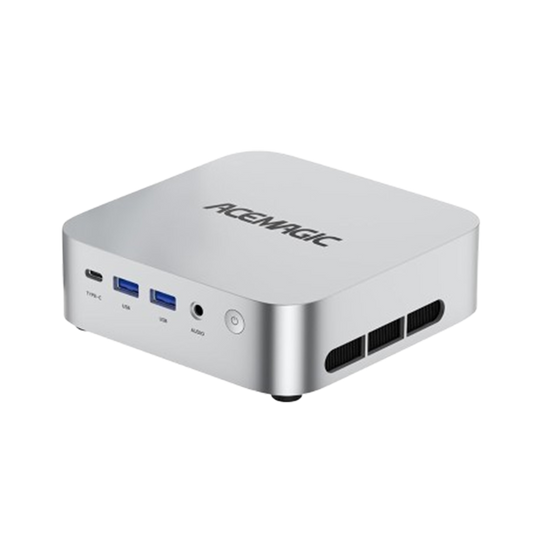
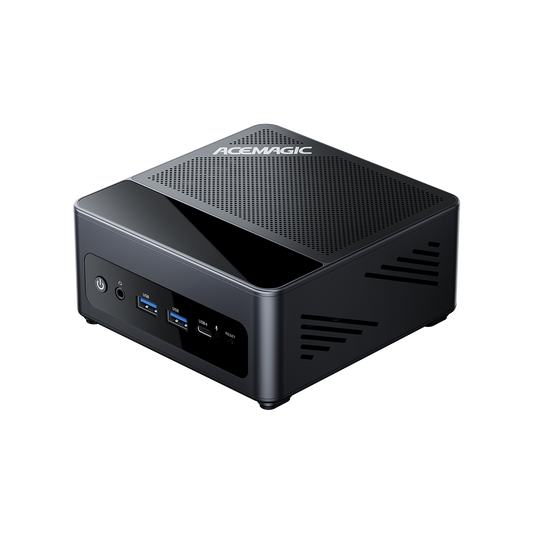
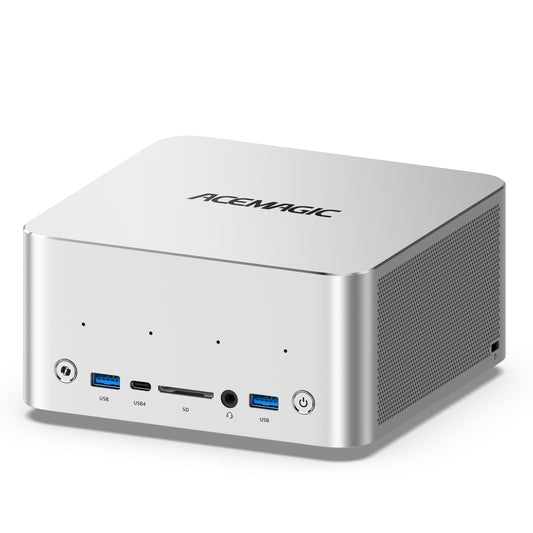
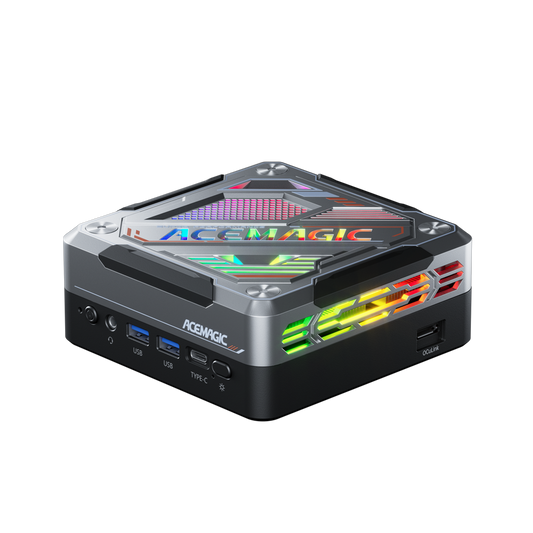
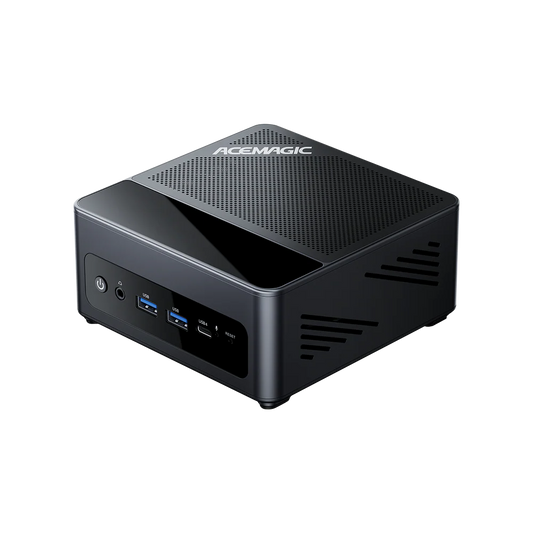
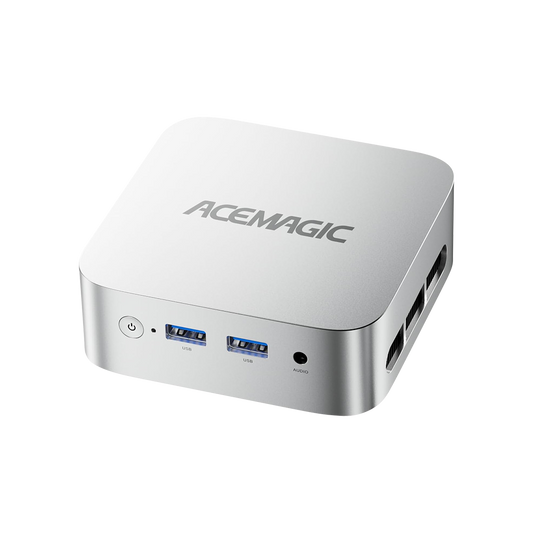
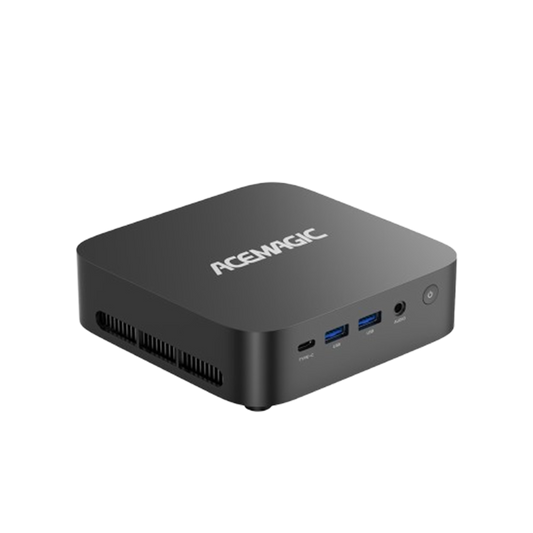
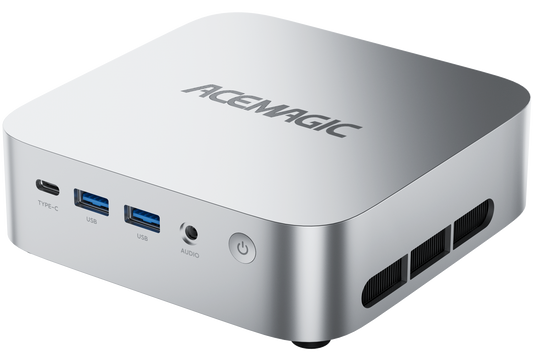
The ACEMAGIC Mini PCs shown below use DDR5-5600 SO-DIMM in dual channel — the officially supported speed of their AMD Ryzen processors. For those seeking DDR5 RAM for Mini PC with Ryzen, DDR5-5600 offers an excellent balance of performance, compatibility, and stability, especially when it matches the processor's officially supported memory speed.

The AM18 supports DDR5 5600 in dual channel with two SO-DIMM slots, making it ideal for 1080p gaming and local AI inference. Configure it as a Mini PC with 32GB of RAM (2×16GB) for gaming or as a Mini PC with 64GB of DDR5 (2×32GB) for running large language models locally.
View ProductWill DDR5 RAM Speeds Continue to Increase?
Desktop DDR5 speeds continue to rise, but improvements in Mini PC memory speed depend on platform support and thermal design. For now, DDR5-5600 remains the most widely supported and cost-effective speed for Mini PCs — a practical choice for long-term use.
Common DDR5 RAM Mistakes Made by Mini PC Buyers
Before buying DDR5 RAM for your Mini PC, avoid these common mistakes that waste money or leave performance on the table:
Mistake 1: Buying DDR5-6400 without checking CPU support. Many Mini PC processors (like the Ryzen 7 7840HS) officially support only up to DDR5-5600. Installing DDR5-6400 may cause it to run at a lower speed — you pay more for no additional speed.
Mistake 2: Choosing a single 32GB module instead of two 16GB modules. A single DDR5 module operates in single-channel mode, halving memory bandwidth. For Mini PCs with integrated graphics, this can reduce iGPU gaming performance by up to 50%. Always buy a matching pair for dual-channel.
Mistake 3: Paying more for speed over capacity. Moving from DDR5-4800 to DDR5-5600 can yield a 10–15% performance gain. Moving from 16GB DDR5 to 32GB prevents system slowdowns during multitasking, running virtual machines, or loading AI models. In many workloads, capacity can be more important than higher RAM speed. When choosing Mini PC RAM, capacity should generally come before speed for the best long-term value.
Mistake 4: Ignoring DDR5 RAM latency (CL timings). A DDR5-5600 CL36 kit and a DDR5-5600 CL28 kit have very different true latencies (12.86 ns vs 10 ns). Check CL timings, not just MHz, when comparing DDR5 modules at the same speed.
Frequently Asked Questions
Why does my DDR5-5600 RAM run at 4800 MT/s?
DDR5 memory often boots at the default JEDEC speed of 4800 MT/s. The advertised DDR5-5600 speed requires BIOS support and appropriate memory profiles (XMP or EXPO). Some Mini PCs configure DDR5-5600 automatically, whilst others may require a BIOS update or manual setting change. Open Task Manager → Performance → Memory → Speed to check your DDR5 RAM's actual speed.
Do higher MHz in DDR5 always mean better performance?
No. DDR5 RAM speed affects memory bandwidth, but CAS latency (CL) also impacts response time. A DDR5-6400 CL32 kit and a DDR5-5600 CL28 kit can have nearly identical true latency (about 10 ns). In a Mini PC, memory controller support is often more important than the highest advertised speed. A stable DDR5-5600 dual-channel configuration can outperform a DDR5-6400 kit that runs at a lower speed due to BIOS limitations.
Is DDR5 dual channel more important than higher RAM speed?
Yes — especially for Mini PCs with integrated graphics. A DDR5-5600 dual-channel configuration can provide a larger performance improvement than upgrading from DDR5-5600 to DDR5-6400. This is because Radeon 780M and Intel Iris Xe graphics share system memory bandwidth, and dual-channel can double the available bandwidth.
Should I buy DDR5-6400 for a Mini PC with AMD Ryzen?
Generally no. Unlike desktop Ryzen systems where DDR5-6000 is often the sweet spot, Mini PCs use mobile Ryzen processors with stricter memory controller limits. For Mini PCs with Ryzen like the Ryzen 7 7840HS and Ryzen 9 8945HS, DDR5-5600 offers the best combination of compatibility, stability, and performance for DDR5 RAM.
Is it worth upgrading from DDR5-4800 to DDR5-5600?
For office workloads, generally no — the difference is marginal. For Mini PCs using Radeon 780M or other integrated graphics, DDR5-5600 can provide notable improvements (15–18% in gaming, 16–20% in AI inference) because iGPU performance depends heavily on memory bandwidth.
Is 32GB DDR5-4800 better than 16GB DDR5-5600?
For most Mini PC users, yes. Capacity comes first. A system with 32GB DDR5-4800 can outperform a system with 16GB DDR5-5600 during multitasking, running virtual machines, video editing, or using local AI models. The debate between more RAM and faster RAM generally favours capacity in real-world workloads.
Can DDR5-6400 damage a Mini PC that supports DDR5-5600?
No. If your Mini PC only supports DDR5-5600, DDR5-6400 modules will normally run at a compatible lower speed, if the system can initialise them correctly. The main downside is wasting money, not hardware damage.
How do I know if my Mini PC is running DDR5 in dual channel?
Open Task Manager → Performance → Memory, or use CPU-Z in the Memory tab. Two identical DDR5 SO-DIMM modules should enable dual channel automatically. Different modules (different capacity or speed) may run in single channel or a reduced-performance mode.
Does RAM speed matter for gaming on a Mini PC?
Yes — and it matters more on Mini PCs than on desktop PCs with dedicated GPUs. Most Mini PCs use integrated graphics that share system memory. Faster DDR5 RAM directly increases GPU bandwidth, improving frame rates by 10–20% when moving from DDR5-4800 to DDR5-6400. DDR5-5600 in dual channel provides up to 50% more frames with iGPU than single channel.
Can I mix different DDR5 RAM speeds?
Yes, but it's not recommended. When mixing RAM, DDR5 modules with different speeds will all run at the speed of the slowest module. For maximum stability and long-term reliability, use a matched DDR5 SO-DIMM kit with identical capacity and speed.
Is 16GB DDR5 enough for a Mini PC?
16GB DDR5 is sufficient for basic office tasks, web browsing, and streaming. However, 32GB is recommended for modern Mini PCs because integrated GPUs use system memory as VRAM, multitasking consumes more memory, and local AI models require greater capacity. For most users, 32GB (2×16GB) DDR5-5600 in dual-channel is the best balance and the best DDR5 RAM speed for a Mini PC.
Is lower CAS latency better than higher DDR5 speed?
Not always. DDR5 speed and CL timing work together. A higher-speed kit with higher CL can have lower true latency. For example, DDR5-5600 CL28 and DDR5-6400 CL32 both offer about 10 ns true latency. For Mini PCs, choose a balanced kit rather than focusing solely on MHz or CL numbers.
References
- TechRadar. (2026). Best DDR5 RAM: Speed and Latency Explained. techradar.com
- NoobFeed. (2026). DDR5 Single vs Dual Gaming Performance Test. noobfeed.com
- HYSTOU. (2026). DDR5 Memory Performance Test on Mini PCs. hystou.com
- Intel. (2025). DDR4 vs DDR5: Is It Worth Upgrading? intel.com