


Best Mini PC for Emulation in 2026: PS2, Xbox & Switch
Mini PCs have become surprisingly capable emulation machines. A compact box that fits behind your TV can now run PS2 classics, GameCube favourites, Wii titles, and even some PS3 and Switch games — all without a dedicated GPU or a bulky desktop tower.
But the hardware you need depends heavily on which consoles you want to emulate.
This guide explains what to look for when choosing the best mini PC for emulation, establishes performance standards for each console, and uses a real-world system as a practical reference point.
Quick Summary
- Best hardware for emulation: A modern Ryzen processor with 16GB RAM and integrated Radeon graphics is suitable for most retro gaming workloads.
- Classic consoles: PS1, N64, SNES and similar systems can run comfortably on entry-level mini PCs.
- PS2, GameCube, Wii and 3DS: These systems benefit from a mid-range Ryzen 5 or Ryzen 7 mini PC.
- PS3, Xbox 360 and Switch: Emulation is more demanding and performance varies considerably by game and emulator.
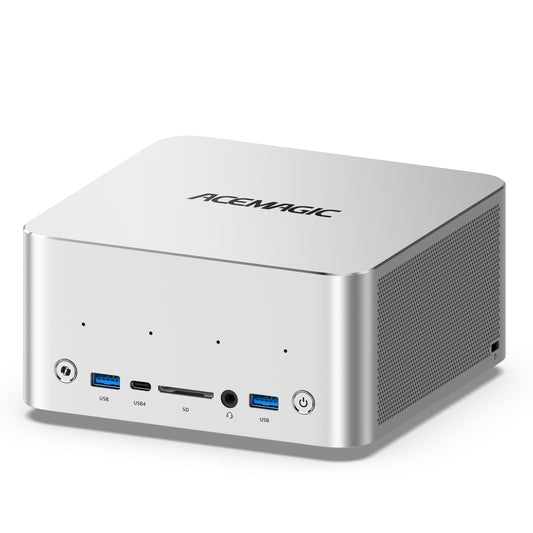
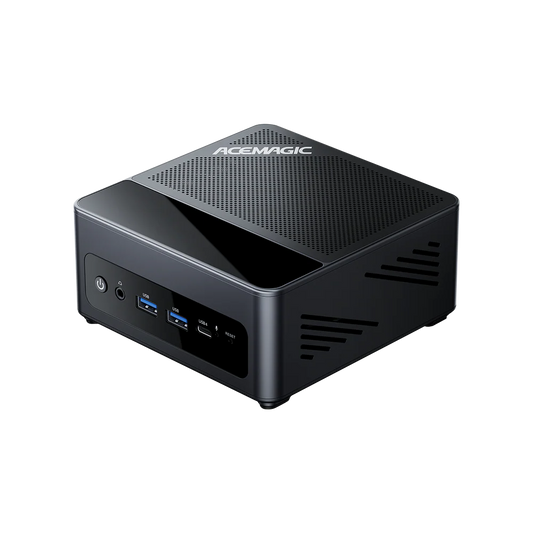
- ACEMAGIC Retro X3: Its Ryzen 7 H255, 16GB DDR5 and integrated Radeon graphics place it in the mid-range category for emulation.

What to Look for in a Mini PC for Emulation
Emulation is a different workload from modern PC gaming. Understanding the difference saves you from overspending on hardware you do not need — or underspending on hardware that cannot keep up.
CPU: The Single Most Important Component
Emulators translate console instructions into PC-compatible code in real time. This is a single-threaded or lightly threaded task, which means clock speed and IPC (instructions per clock) matter far more than core count. An 8-core Ryzen 7 with high clock speeds will outperform a 16-core server chip for most emulator workloads.
What this means in practice: for a mini pc emulation setup, prioritise single-thread performance over core count. AMD Ryzen 7 processors (Zen 4 or Zen 5) hit the sweet spot for PS2, GameCube, Wii, and 3DS emulation. Intel N100/N150 chips handle classic consoles (PS1, N64, SNES) but struggle with anything more demanding.
Integrated Graphics: Usually Sufficient
A common misconception is that you need a dedicated GPU for emulation. You do not. Modern AMD Radeon integrated graphics handle internal resolution upscaling to 1080p and beyond for most emulators. Only extreme upscaling in PS3 emulation or running Switch emulators at very high resolutions benefits from discrete graphics.
RAM: 16GB Is the Practical Minimum
16GB handles single-emulator sessions comfortably, including texture packs and moderate upscaling. 32GB is recommended if you plan to run PS3 or Switch emulators, use heavy texture packs, or multitask while gaming.
Storage: NVMe SSD Is Non-Negotiable
Retro game libraries can reach hundreds of gigabytes. A 512GB NVMe SSD is the practical minimum; 1TB gives room for PS2 and PS3 ISO files. Avoid eMMC storage — load times will frustrate you.
Cooling and Noise
Emulation is CPU-intensive and sustained. A mini PC with poor thermal design will throttle under load, causing frame drops during extended gaming sessions. Look for systems with adequate cooling for the processor — copper heat pipes and active fans are preferred over passive cooling for anything above entry-level emulation.

Emulation Performance Standards by Console
Not all emulators are equal. Classic consoles run on almost anything; modern consoles push even high-end hardware. Here is a realistic breakdown of what each console emulator requires.

| Console | Hardware Tier | Emulator | Typical Experience on Mid-Range |
|---|---|---|---|
| PS1 | Entry | DuckStation / RetroArch | Excellent — most titles with upscaling |
| N64 | Entry | Mupen64Plus / RetroArch | Excellent — most titles with upscaling |
| PSP | Entry–Mid | PPSSPP (psp emulator) | Excellent — most titles with upscaling |
| DS | Entry–Mid | DeSmuME / melonDS | Excellent — most titles with upscaling |
| PS2 | Mid-range | PCSX2 | Very capable — many titles at increased resolution |
| GameCube | Mid-range | Dolphin | Very capable — many titles at increased resolution |
| Wii | Mid-range | Dolphin | Very capable — many titles at increased resolution |
| 3DS | Mid-range | Azahar | Very capable — many titles at increased resolution |
| Original Xbox | Mid-range | Xemu | Capable — many titles at native resolution |
| Wii U | Mid–High | Cemu | Capable — some titles at native resolution |
| PS3 | High-end | RPCS3 | Game-dependent — lighter titles may be playable |
| Xbox 360 | High-end | Xenia | Game-dependent — limited compatibility |
| Switch | High-end | Eden / Citron | Game-dependent — lighter titles may be playable |
Performance ranges compiled from community benchmarks on r/MiniPCs, r/emulation, and emulator compatibility databases. Actual results vary by game title, emulator version, driver version, and graphics settings.
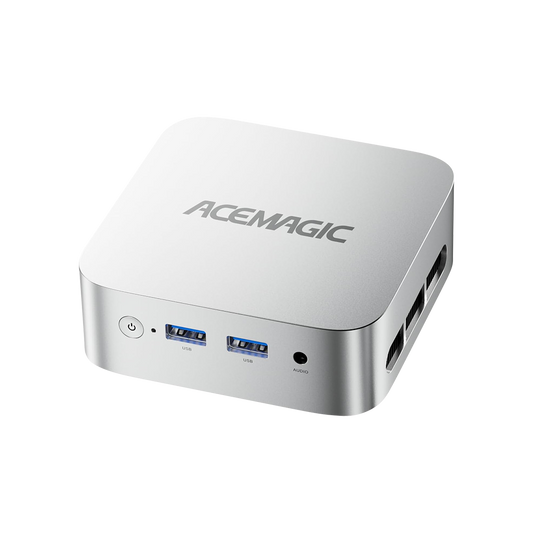
A Practical Example: ACEMAGIC Retro X3
To put these standards into context, here is a real-world system that illustrates what mid-range emulation hardware looks like.

Its compact chassis (128.2 x 128.2 x 44 mm) and retro-inspired design make it a natural video game emulator console for living room setups. Dual M.2 slots allow storage expansion for larger game libraries.
View on ACEMAGIC
Which Emulator Should You Use?
Choosing the best emulator for PC use is just as important as the hardware. Here is a quick reference for the most popular emulators for PC use.

| Console | Emulator | Notes |
|---|---|---|
| PS2 | PCSX2 | Most popular ps2 emulator, large compatibility list, active development |
| GameCube / Wii | Dolphin | Mature, highly optimized, gold standard for dolphin emulator performance |
| PS3 | RPCS3 | Demanding, game-dependent results, requires per-game settings |
| 3DS | Azahar | Fork of Citra, supports upscaling and online multiplayer via Pretendo |
| Xbox 360 | Xenia | Growing compatibility, still maturing for xbox emulation as an xbox 360 emulator |
| Original Xbox | Xemu | Solid compatibility, runs well on mid-range hardware as an xbox emulator |
| Switch | Eden / Citron | Post-Yuzu emulators, active development, compatibility varies by game |
| Classic (NES–PS1) | RetroArch | All-in-one retro emulator frontend for dozens of classic systems |
Eden Emulator — Best for Switch
Following the shutdown of Yuzu and Ryujinx, the eden emulator has emerged as the most actively developed Nintendo Switch emulator in 2026. Built by former contributors to both projects, Eden focuses on compatibility and performance on AMD hardware. Community benchmarks suggest it can run many popular Switch titles on Ryzen 7-class processors, though compatibility varies significantly by game.
Citron Emulator — Switch Alternative
The citron emulator is another post-Yuzu Switch emulator gaining traction in 2026. It focuses on accuracy over speed. On mid-range hardware, Eden tends to be faster for most titles, but Citron may deliver more consistent frame pacing in specific games. Running both side by side is common practice.
What About Switch 2 Emulation?
The Nintendo Switch 2 launched in 2025, and the emulation community is beginning to explore switch 2 emulation. This is an emerging area — compatibility is currently limited and evolving rapidly. Switch 2 emulation should not be the primary reason to buy hardware today, but it is worth watching as switch 2 emulator projects mature.
Azahar Emulator — Best for 3DS
The azahar emulator (a fork of the discontinued Citra) is now the standard 3ds emulator on PC. It supports stereoscopic 3D, internal resolution upscaling, and online multiplayer through Pretendo.
Dolphin — Best for GameCube and Wii
Dolphin remains the gold standard for GameCube and Wii emulation after nearly two decades of development. It is mature, highly optimized, and runs well even on entry-level hardware.
PCSX2 — Best for PS2
PCSX2 is the definitive ps2 emulator. The 2.0 release brought significant performance improvements. The PS2 library is enormous — over 4,000 games — making this one of the highest-value emulators to set up on any emulation machine.
RPCS3 — Best for PS3
PS3 emulation via RPCS3 is the most demanding ps3 emulator workload in the emulation world. RPCS3 requires a high-end CPU and 32GB RAM for the best experience. On mid-range hardware, some lighter PS3 titles may be playable at native resolution, but demanding games will struggle.
RetroArch — Best All-in-One Frontend
RetroArch wraps dozens of emulation cores into one interface. It handles NES, SNES, Genesis, PS1, N64, GBA, PSP, DS, Dreamcast, and MAME through a unified menu system. Install it as your base layer, then add dedicated emulators like Dolphin, PCSX2, and Eden for newer platforms.

Mini PC vs Handheld for Emulation
The handheld emulator market has grown significantly in 2026. But how do handhelds compare to a mini PC?
| Factor | Mini PC | Handheld for Emulators |
|---|---|---|
| Performance | Capable of PS2, GameCube, Wii, 3DS, and more | Typically limited to PS1, PSP, N64 and earlier |
| Display | Connects to any TV or monitor | Built-in 3.5–7 inch screen |
| Portability | Stationary (compact but not pocket-sized) | Fully portable |
| Storage | Dual M.2 slots, expandable | MicroSD, typically 128–512GB |
| Controller | Any USB or Bluetooth controller | Built-in controls |
| Best for | Living room / desk setup | Commuting / travel |
If portability is your priority, choose the best handheld emulator for your budget. If you want a TV or desktop emulation machine, a mini PC makes more sense. The two complement each other: a mini PC at home and a budget handheld for commuting.

Windows vs Batocera vs Bazzite
Your choice of operating system affects how your mini pc emulation setup feels day to day.
| OS | Best For | Pros | Cons |
|---|---|---|---|
| Windows 11 | General use + emulation | Widest emulator compatibility, driver support, doubles as desktop | Heavier resource usage, updates interrupt gaming |
| Bazzite | SteamOS-style console experience | Boots into gaming UI, lower overhead, excellent AMD support | Some emulators require manual setup, smaller community |
| Batocera | Dedicated retro gaming console | Boots directly into emulation frontend, no desktop overhead, supports 50+ systems | Cannot use as general-purpose PC, limited to emulation |
For a general-purpose setup, Windows 11 is the easiest starting point. Batocera is better if the system is dedicated entirely to emulation — it boots straight into a game library interface with no desktop distractions.
Can Mini PCs Run Modern Games?
This is a common question, and the answer depends on what you mean by "modern games."
Mini PCs with integrated graphics can handle many Steam games — especially indie titles, older releases, and less demanding games. Games like Stardew Valley, Hollow Knight, Hades, and Celeste run perfectly. Older AAA titles like GTA 5 are playable at lower settings.
However, modern AAA games like Cyberpunk 2077, Starfield, or the latest Call of Duty titles require a dedicated GPU that mini PCs do not have. Integrated graphics are the main limitation for modern gaming.
Where mini PCs excel is mini pc emulation — running PS2, GameCube, Wii, and 3DS games at increased resolutions. This is a much better fit for integrated graphics than trying to push modern AAA titles at high settings.
Testing Methodology
The emulator for pc depends on your target consoles. The emulation performance guidance in this article is based on publicly available data from emulator compatibility databases (PCSX2, Dolphin, RPCS3, Xenia, Azahar), community benchmark reports on r/MiniPCs and r/emulation, and published reviews.
We have not conducted independent lab testing for this guide. Emulation performance is inherently variable — the same CPU can produce very different results depending on the game, emulator build, OS version, driver version, resolution, and graphics settings. The performance ranges shown are general guides, not guarantees.
Frequently Asked Questions
Are mini PCs good for gaming?
Yes, for many gaming scenarios. Mini PCs handle retro gaming, mini pc gaming, and emulation very well, and can also run older or less demanding modern titles. For competitive AAA gaming at maximum settings, a full-size desktop with a dedicated GPU remains the better choice.
Are mini PCs good for emulation?
Yes. Emulation is primarily CPU-bound, and modern mini PCs pack capable processors into small, quiet enclosures. A mid-range mini PC with a Ryzen 7 handles PS2, GameCube, Wii, and 3DS emulation well — making it the best mini PC for emulation of retro consoles. Entry-level systems handle classic consoles like PS1, N64, and SNES without issues.
Do you need a powerful PC for emulation?
It depends on which console you want to emulate. Classic consoles (PS1, N64, SNES, GBA) run on almost any modern hardware. PS2, GameCube, Wii, and 3DS require a mid-range processor. PS3, Xbox 360, and Switch emulation benefit from high-end hardware, and even then performance is game-dependent.
Can a mini PC run PS2 games?
Yes, with a mid-range processor. A Ryzen 7-class mini PC can run PS2 games via PCSX2 at increased resolutions for many titles. Performance varies by game — some demanding titles may require native resolution or specific settings adjustments.
Can a mini PC run GameCube and Wii games?
Yes. Dolphin, the GameCube and Wii emulator, is mature and highly optimized. On a mid-range mini PC, many GameCube and Wii titles run at increased resolutions. Even entry-level systems can handle most titles at native resolution.
Can a mini PC run modern games?
Some modern games run well on mini PCs — especially indie titles, older releases, and less demanding games. Modern AAA titles require a dedicated GPU that mini PCs do not have. Where mini PCs excel is emulation, not modern AAA gaming.
Can a mini PC run Steam games?
Yes. Mini PCs running Windows 11 install and run Steam normally. Many Steam games — especially indie titles and older releases — run well on integrated graphics. The latest AAA Steam releases will struggle without a dedicated GPU.
Can a mini PC run GTA 5?
Yes, GTA 5 is playable on many mini PCs at lower settings. A Ryzen 7 mini PC with integrated Radeon graphics can handle GTA 5 at 720p–1080p with adjusted settings. It is one of the older AAA titles that remains playable on integrated hardware.
What are the disadvantages of a mini PC?
Mini PCs have three main limitations: limited upgradeability (RAM and storage are often the only user-replaceable components), thermal constraints under sustained heavy loads, and no dedicated GPU slot. For emulation and general computing, these limitations rarely matter.
Is emulation legal?
Emulators themselves are legal in most jurisdictions. The legal grey area involves game ROMs and BIOS files — downloading copyrighted games you do not own is illegal. You can legally dump games from cartridges and discs you own for personal use.
Is 16GB RAM enough for gaming and emulation?
For emulation, 16GB is sufficient for most workloads — including PS2, GameCube, Wii, and 3DS emulation with texture packs. For modern gaming, 16GB handles most titles comfortably. Heavy multitasking or running multiple emulators simultaneously may benefit from 32GB.
References
- PCSX2 Team. (2026). PCSX2 Compatibility List. pcsx2.net
- Dolphin Emulator. (2026). Dolphin Compatibility List. dolphin-emu.org
- RPCS3. (2026). RPCS3 Compatibility List. rpcs3.net
- Xenia. (2026). Xenia Game Compatibility. xenia.jp
- r/MiniPCs. (2026). Community benchmarks and recommendations. reddit.com/r/MiniPCs
- r/emulation. (2026). Emulation performance discussions. reddit.com/r/emulation